What Does Critter Guard Do and Why Utah Roofs Need It
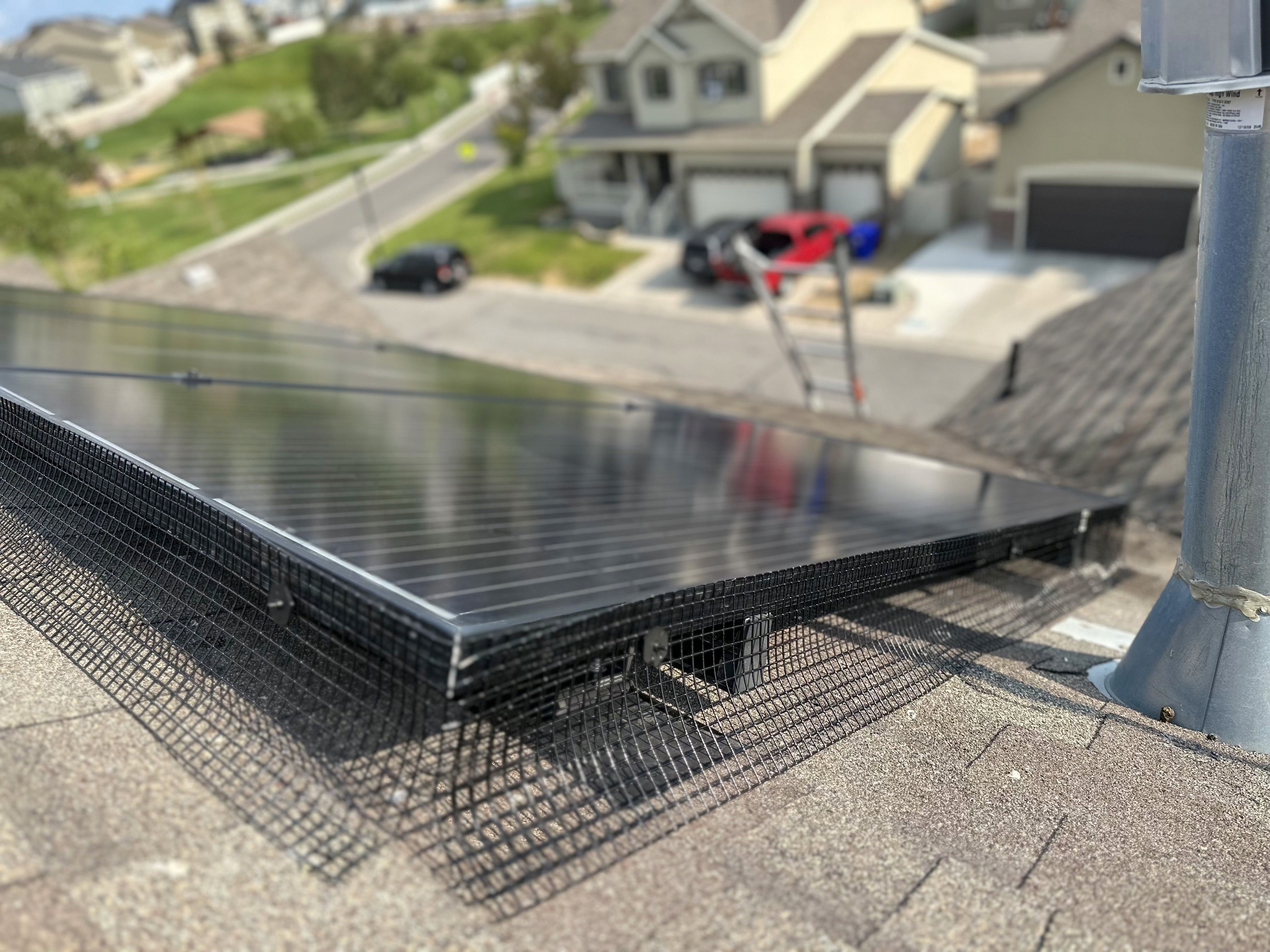
What Does Critter Guard Do on Solar Panels?
One of the most overlooked parts of owning a solar energy system isn’t the panels themselves—it’s the space underneath them.
Solar panels are typically installed several inches above the roof surface to allow for mounting hardware, ventilation, and drainage. While this gap is essential for the solar system to operate properly, it also creates an ideal shelter for birds, squirrels, mice, and other small animals.
Protected from rain, snow, direct sunlight, and many predators, the area beneath a solar array becomes an attractive place for wildlife to nest. Unfortunately, what seems like a harmless hiding spot can quickly lead to damaged wiring, reduced energy production, clogged gutters, and expensive repairs.
That’s where critter guard comes in.
Critter guard is one of the simplest and most effective ways to protect an existing solar system from animal-related damage. Rather than trapping or harming animals, it creates a physical barrier that prevents them from getting underneath the panels while allowing the solar system to continue operating normally.
If you’ve heard scratching on your roof, noticed birds constantly flying under your solar panels, or found droppings around your home, here’s what critter guard is, how it works, and why it’s especially valuable for homeowners in Utah.
What Is Critter Guard?
Critter guard is a durable metal mesh barrier installed around the outside edge of a solar panel array.
Once installed, it closes off the open gap between the bottom of the solar panels and the roof.
The mesh is specifically designed to:
Keep birds out.
Prevent squirrels from entering.
Stop rodents from nesting.
Block leaves and larger debris from collecting beneath the panels.
Maintain proper airflow beneath the array.
Unlike solid barriers, critter guard allows air to circulate freely.
This airflow is important because solar panels operate more efficiently when heat can escape from underneath them.
A properly installed critter guard protects against animals without interfering with the performance of your solar system.
Why Animals Like Living Under Solar Panels
To homeowners, the space beneath solar panels doesn’t seem particularly useful.
To wildlife, it’s almost the perfect shelter.
The gap beneath the panels offers:
Shade during hot summer days.
Protection from rain and snow.
Shelter from predators.
Warmth during colder weather.
A quiet place to build nests.
Birds, squirrels, mice, chipmunks, and other small animals quickly discover these protected spaces.
Once one animal begins nesting, others often follow.
Without a barrier in place, the problem usually becomes worse over time rather than improving on its own.
Birds Are the Most Common Problem
Across Utah, birds are by far the most frequent visitors beneath residential solar arrays.
Pigeons, sparrows, starlings, and other birds commonly build nests underneath solar panels because the space is hidden, protected, and difficult for predators to access.
Unfortunately, bird activity creates several problems.
Birds leave behind:
Droppings.
Feathers.
Twigs.
Nesting materials.
Food scraps.
These materials accumulate beneath the solar array and can eventually interfere with airflow, create sanitation issues, and attract additional pests.
Bird droppings on top of the panels can also reduce solar production by blocking sunlight from reaching the photovoltaic cells.
Rodents Can Damage Wiring
Birds aren’t the only concern.
Rodents such as squirrels, mice, rats, and chipmunks frequently seek shelter beneath solar panels.
Unlike birds, rodents often create problems by chewing.
Electrical wiring beneath the array is especially vulnerable.
Damaged wiring may result in:
Lower energy production.
Ground faults.
Arc faults.
Intermittent system shutdowns.
Complete string failures.
Inverter error codes.
Because most of the wiring is hidden beneath the panels, homeowners often don’t discover the damage until production begins dropping or the system displays electrical faults.
Repairing damaged wiring is usually much more expensive than preventing animals from reaching it in the first place.
Critter Guard Prevents Problems Before They Start
The biggest advantage of critter guard is prevention.
Rather than waiting until birds or rodents damage the system, the mesh blocks access before nesting begins.
Once properly installed, animals are unable to squeeze beneath the panels while normal airflow remains unaffected.
This helps reduce the likelihood of:
Bird nests.
Rodent activity.
Chewed wiring.
Debris buildup.
Excessive droppings.
Future repair costs.
Many homeowners choose to install critter guard shortly after a new solar installation, while others add it after experiencing their first animal-related issue.
Either approach provides long-term protection.
It’s Not a Trap
Some homeowners worry that critter guard harms animals.
It doesn’t.
Critter guard isn’t designed to trap or injure wildlife.
Instead, it simply prevents animals from entering the space beneath the solar array.
Existing nests are typically removed before installation, allowing the area to be cleaned before the barrier is installed.
Once completed, animals simply look elsewhere for shelter.
Does Critter Guard Affect Solar Panel Performance?
One of the most common questions homeowners ask is whether covering the edge of the array affects energy production.
The answer is no, when it’s installed correctly.
Professional critter guard is designed specifically for solar systems.
It allows:
Air circulation.
Proper drainage.
Normal ventilation.
The mesh does not block sunlight from reaching the solar panels.
It also doesn’t interfere with normal electrical operation.
Its only purpose is to prevent animals from accessing the area beneath the array.
Is Critter Guard a One-Time Installation?
Yes.
Unlike routine solar panel cleaning or annual inspections, critter guard is generally a one-time installation.
Once installed, it remains attached around the perimeter of the solar array.
Although it’s a good idea to visually inspect it during routine maintenance, it typically doesn’t require regular service or replacement under normal conditions.
If the solar panels are removed in the future—for example, during a roof replacement—the critter guard can usually be removed and reinstalled as part of the detach and reinstall process.
Which Homes Need Critter Guard the Most?
While nearly any home with rooftop solar can benefit from critter guard, certain properties experience much higher levels of animal activity.
These include homes located:
Near open fields.
Along agricultural land.
Near parks.
Near mature trees.
Adjacent to undeveloped land.
Along foothills or canyon areas.
However, wildlife isn’t limited to rural areas.
Birds and squirrels are common throughout suburban neighborhoods as well.
Even homeowners living in newer developments are often surprised to discover birds nesting beneath their solar panels.
Signs You May Already Have Animals Under Your Panels
Many homeowners don’t realize animals have moved in until the problem has become significant.
Some common warning signs include:
Scratching sounds on the roof.
Birds repeatedly flying beneath the panels.
Bird droppings around the solar array.
Twigs or nesting material falling from beneath the panels.
Feathers collecting near gutters.
Unexplained inverter error codes.
Reduced solar production.
Visible rodent activity around the roof.
If you’ve noticed several of these signs, it’s worth scheduling an inspection before more extensive damage develops.
What Happens If Animals Have Already Caused Damage?
Critter guard prevents future problems, but it doesn’t repair existing damage.
If animals have already nested beneath the array, a professional inspection may also include:
Removing nesting material.
Inspecting wiring.
Looking for chewed insulation.
Checking connectors.
Testing system performance.
Reading inverter error codes.
Identifying damaged electrical components.
If wiring repairs are needed, installing critter guard immediately afterward helps prevent the same problem from happening again.
There’s little benefit in repairing chewed wiring if animals are still able to access the area beneath the panels.
Why Utah Homeowners Choose Critter Guard
Utah’s combination of suburban neighborhoods, open space, mature trees, and agricultural areas creates ideal conditions for bird and rodent activity.
Long, dry summers also encourage animals to seek shaded areas beneath solar panels where temperatures remain cooler than the surrounding roof.
Because rooftop solar systems are becoming more common throughout Utah, animal-related service calls have become increasingly common as well.
Installing critter guard provides long-term protection without affecting the performance or appearance of your solar system.
For many homeowners, it’s one of the simplest preventative upgrades available.
Protecting Your Solar Investment
Your solar panels are designed to produce clean energy for decades, but the space beneath them can become an attractive home for birds, squirrels, rodents, and other small animals if it’s left unprotected. While these animals may seem harmless at first, they can create nests, leave droppings, clog gutters, chew wiring, and eventually cause expensive electrical problems that reduce your system’s performance.
Critter guard is a simple, effective solution. By installing a durable mesh barrier around the perimeter of your solar array, it blocks animals from getting underneath the panels while preserving the airflow your system needs to operate efficiently. It’s a one-time installation that helps prevent future nesting without harming wildlife or affecting solar production.
At Terrapin Solar, we install professional critter guard throughout Utah for homeowners who want to protect their solar investment before problems begin—or stop them from happening again. If you’ve noticed birds around your array, heard scratching on the roof, found droppings beneath the panels, or suspect animals may already be underneath your system, we can inspect the array, repair any existing damage if necessary, and install critter guard to keep your system protected for years to come.
Ready to protect your system? See our critter guard installation service in Box Elder County.