How Birds and Rodents Damage Rooftop Solar Systems
What Actually Gets Damaged
When homeowners think about protecting their solar panels, they usually picture hailstorms, heavy snow, or strong winds. What many people don’t realize is that some of the most common—and expensive—solar system damage comes from much smaller visitors.
Birds, squirrels, mice, rats, and other small animals are naturally drawn to the space beneath rooftop solar panels. The gap between the panels and the roof provides shade, shelter from the weather, and protection from predators, making it an ideal place to build a nest.
At first, the problem may seem harmless. You might hear occasional scratching on the roof or notice birds flying under the panels. Over time, however, that activity can lead to damaged wiring, reduced energy production, clogged gutters, roof deterioration, and costly repairs.
The challenge is that almost all of this damage happens out of sight. Homeowners rarely see what’s happening beneath the solar array until the system starts underperforming or an inspection uncovers the problem.
Understanding how animals damage rooftop solar systems can help you recognize the warning signs early and protect your investment before small issues become major repairs.
Why Animals Like Living Under Solar Panels
Solar panels are typically mounted several inches above the roof using rails and roof attachments.
That small gap creates a surprisingly comfortable shelter.
Animals benefit from:
Protection from rain and snow.
Shade during hot summer months.
Warmth during colder weather.
Shelter from predators.
A quiet place to build nests.
Unlike exposed rooftops, the space beneath solar panels remains relatively protected year-round.
Once animals discover this area, they often return repeatedly and may raise multiple generations beneath the same array.
Without preventative measures, the problem generally becomes worse over time.
Wiring Damage Is the Most Common Repair
The most expensive and most common form of animal-related solar damage involves electrical wiring.
Rodents—including squirrels, mice, rats, and chipmunks—have continuously growing teeth that require regular chewing to stay worn down. Unfortunately, the wiring beneath solar panels is an easy target.
Animals may chew through:
Cable insulation.
Electrical connectors.
Wire jackets.
Communication cables.
Exposed wiring can lead to a variety of problems, including:
Reduced energy production.
Ground faults.
Arc faults.
Inverter error codes.
Intermittent electrical issues.
Complete string failures.
System shutdowns.
Sometimes only one section of the solar array stops producing. In other cases, an entire string of panels can go offline because of damage to a single cable.
Because the wiring is hidden beneath the array, homeowners often don’t realize there’s a problem until they notice lower production or receive an inverter fault message.
Birds Create Problems Beyond Droppings
Birds don’t usually chew electrical wiring the way rodents do, but they create their own set of challenges.
Birds commonly build nests beneath solar panels using:
Twigs.
Leaves.
Grass.
Plastic.
Feathers.
Paper.
Other lightweight debris.
As nesting material accumulates, it creates additional maintenance concerns.
Large nests can:
Block airflow beneath the panels.
Trap moisture.
Hold debris against the roof.
Attract insects.
Encourage additional birds to nest nearby.
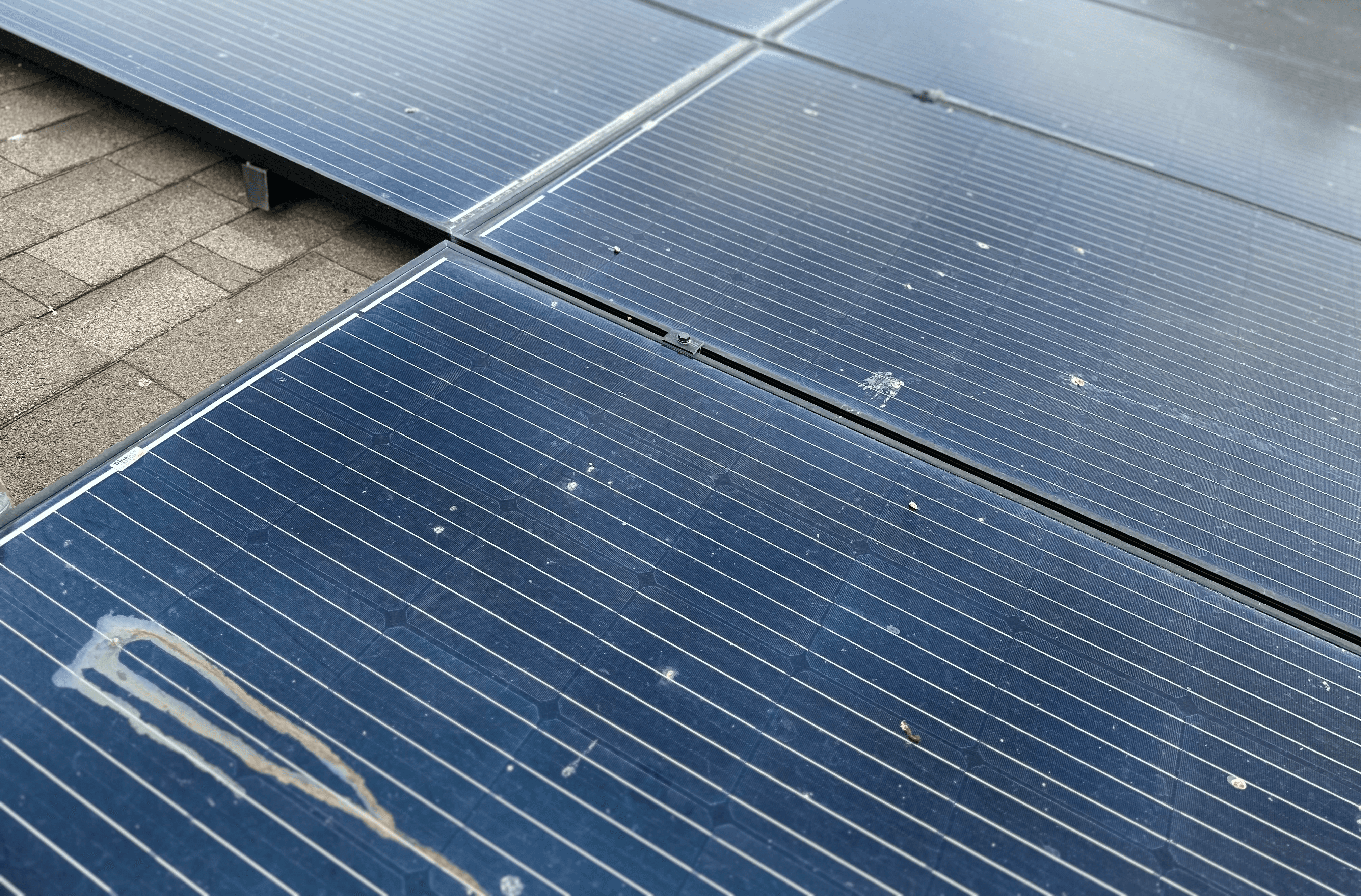
Birds also leave droppings on both the roof and the solar panels themselves.
Bird droppings reduce solar production by blocking sunlight from reaching the photovoltaic cells and may become difficult to remove if left in place for long periods.
Nesting Material Can Create Fire Hazards
One of the lesser-known concerns with animal activity beneath solar panels is the accumulation of dry nesting material.
Twigs, grass, leaves, feathers, and other debris can collect near:
Junction boxes.
Electrical connectors.
DC wiring.
Optimizers.
Microinverters.
While modern solar systems are designed with multiple safety features, dry nesting materials don’t belong near electrical equipment.
Keeping the area beneath the array clean helps reduce unnecessary fire risk and allows technicians to inspect the equipment more easily.
Routine inspections become especially important if birds have been active beneath the system.
Animal Damage Can Reduce Energy Production
Many homeowners first discover an animal problem because their solar system starts producing less electricity.
Depending on where the damage occurs, you may notice:
One underperforming panel.
One underperforming string.
Gradually declining production.
Sudden production loss.
Frequent inverter errors.
Because these symptoms also occur with inverter failures, dirty panels, or electrical faults, it’s difficult to determine the cause without a proper inspection.
Professional diagnostics are often needed to isolate whether the production loss is being caused by damaged wiring, equipment failure, or another issue.
Moisture Can Become Trapped Beneath Nests
Bird nests don’t simply create clutter.
They also trap moisture.
Instead of allowing rainwater to drain freely, accumulated nesting material can hold moisture against portions of the roof for extended periods.
Over time, trapped moisture may contribute to:
Premature roof wear.
Staining.
Organic growth.
Accelerated deterioration of roofing materials.
While modern roofing systems are built to withstand weather exposure, they aren’t designed to have damp nesting material sitting against them for months or years.
Removing nests helps protect both the solar system and the roof beneath it.
Gutters Can Become Clogged
Bird activity often affects more than just the solar panels.
As birds build and maintain nests, they regularly drop twigs, feathers, leaves, and other debris onto the roof.
Rain eventually carries much of this material into the gutters.
Over time, gutters may become clogged, preventing water from draining properly.
Blocked gutters can contribute to:
Water overflow.
Roof edge deterioration.
Fascia damage.
Foundation drainage problems.
Although the gutters themselves aren’t part of the solar system, animal activity beneath the array often accelerates gutter maintenance needs.
Roof Staining and Cosmetic Damage
Bird droppings are acidic and can stain roofing materials if left in place for long periods.
Homeowners may notice:
White streaks.
Dark staining.
Accumulated debris.
Discoloration around the solar array.
While cosmetic damage doesn’t necessarily affect solar production, it can reduce your home’s curb appeal and make future roof cleaning more difficult.
Professional solar panel cleaning often includes removing bird droppings from the panel surfaces while identifying signs of nesting activity beneath the array.
The Damage Often Goes Undetected
One of the biggest challenges with animal-related solar problems is that they’re hidden.
Most homeowners don’t climb onto their roof regularly.
Even if they do, the area beneath the solar panels usually isn’t visible without partially removing the array.
As a result, damage often continues unnoticed until:
Production decreases.
The inverter displays error codes.
Birds become increasingly active.
Scratching sounds are heard.
Wiring faults develop.
Many homeowners are surprised to discover significant nesting activity during what began as a routine diagnostic inspection for an unrelated production issue.
Warning Signs of Animal Activity
Although the damage itself is hidden, several clues may indicate animals have moved beneath your solar panels.
Watch for:
Birds repeatedly flying under the array.
Scratching noises on the roof.
Increased bird droppings around the home.
Twigs or nesting material falling from beneath the panels.
Lower solar production.
Frequent inverter fault codes.
Unexplained electrical issues.
Squirrels regularly running across the roof.
The earlier these warning signs are addressed, the less likely significant damage will occur.
How a Professional Inspection Helps
If animal damage is suspected, a professional solar diagnostic inspection can determine whether the system has been affected.
Depending on the situation, technicians may:
Inspect visible wiring.
Check electrical connections.
Review inverter fault history.
Test system performance.
Look for chewed insulation.
Remove nesting material when appropriate.
Identify damaged components.
Recommend repairs if needed.
By identifying the extent of the damage early, repairs are often simpler and less expensive than waiting until larger electrical failures occur.
Critter Guard Helps Prevent Future Damage
Once wiring has been repaired and nests have been removed, the next step is preventing the problem from returning.
That’s where critter guard comes in.
Critter guard is a durable metal mesh installed around the perimeter of the solar array.
Its purpose is simple:
Prevent birds from nesting.
Block rodents from entering.
Preserve normal airflow beneath the panels.
Protect wiring from future chewing.
Reduce debris accumulation.
Unlike temporary deterrents, critter guard is designed as a long-term solution.
Once installed, it greatly reduces the likelihood of animals returning beneath the solar array.
Protect Your Solar System Before Small Problems Become Expensive Repairs
Birds and rodents may seem harmless, but the space beneath your solar panels offers exactly the kind of shelter they’re looking for. Once they move in, they can chew through wiring, build nests around electrical equipment, leave droppings that reduce solar production, clog gutters with debris, and trap moisture against your roof. Because nearly all of this damage happens out of sight, many homeowners don’t discover it until their system begins underperforming or a diagnostic inspection reveals the problem.
The good news is that most animal-related solar damage is preventable. Regular inspections can identify early signs of nesting before serious electrical issues develop, and installing critter guard provides a long-term barrier that keeps birds and rodents from accessing the space beneath the panels in the first place. If you’ve noticed scratching sounds, birds repeatedly flying under your array, increased droppings, or unexplained production loss, a professional inspection can determine whether wildlife is affecting your system and recommend the best way to protect both your roof and your solar investment.
Worried about animal damage? See our critter guard installation service in Cache County.