5 Signs Your Solar Panels Need Cleaning
Why Cleaning Matters
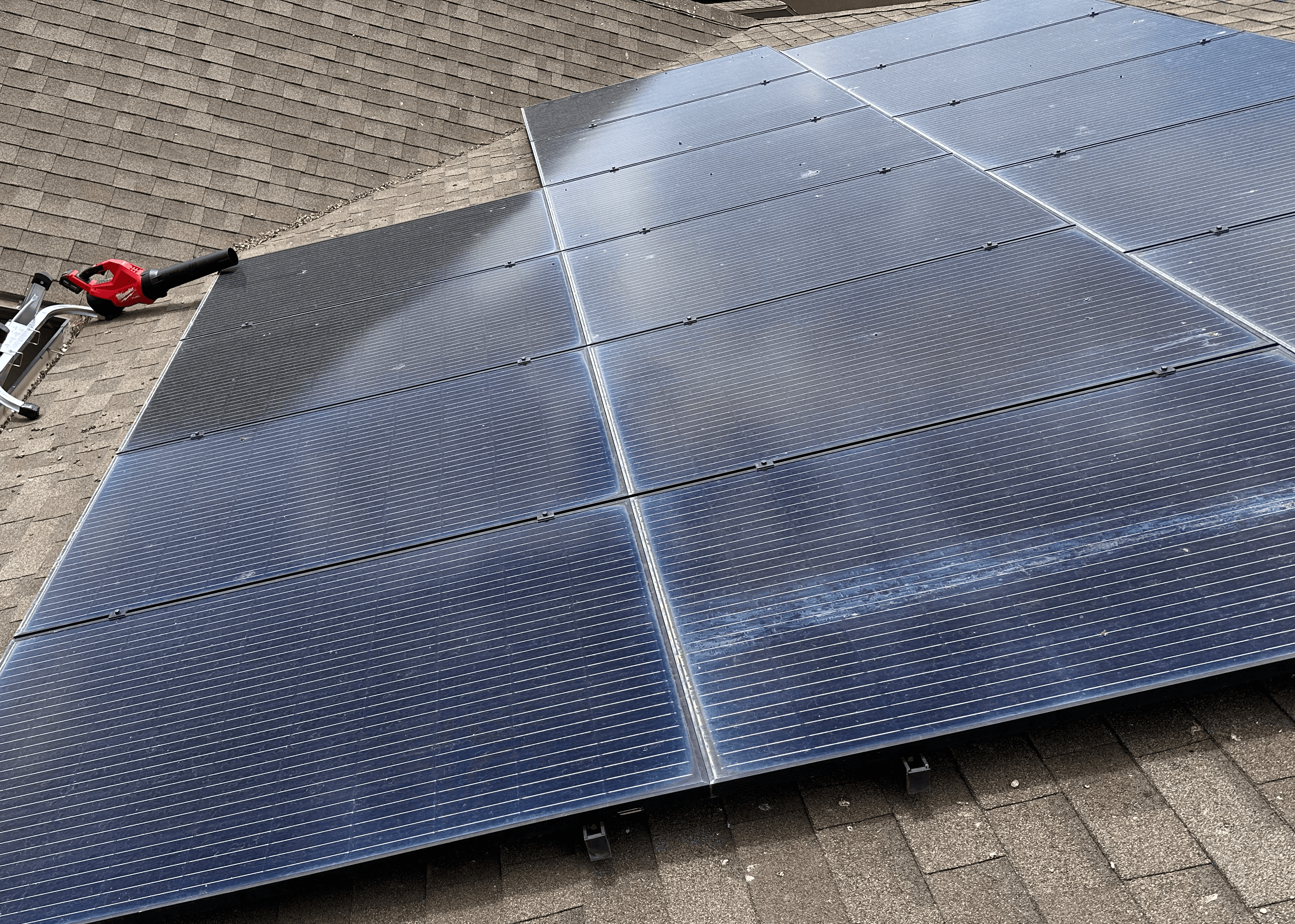
Solar panels are designed to operate for decades with very little maintenance, but that doesn’t mean they’re completely maintenance-free. Over time, dust, dirt, pollen, bird droppings, leaves, smoke residue, and mineral deposits accumulate on the surface of the glass. This buildup—known as solar panel soiling—can reduce the amount of sunlight reaching the solar cells and gradually lower your system’s energy production.
The challenge is that rooftop solar panels are difficult to inspect closely. Most homeowners rarely climb onto their roof, and from the ground, even dirty panels can appear relatively clean. Instead of relying on a visual inspection alone, it’s often easier to recognize the warning signs that suggest your system could benefit from a professional solar panel cleaning.
If you notice one or more of the following signs, it may be time to schedule a cleaning to restore your system’s performance and ensure it’s operating as efficiently as possible.
1. Your Solar Production Has Gradually Decreased
One of the clearest indicators that your solar panels may need cleaning is a slow decline in energy production.
Most modern solar systems include a monitoring app that allows homeowners to track how much electricity their system generates each day, week, or month. If you compare your production over time and notice a gradual decrease that can’t be explained by shorter daylight hours, cloudier weather, or seasonal changes, dirt buildup may be reducing your system’s efficiency.
Unlike equipment failures, which often cause sudden drops in production or trigger inverter error messages, dirty solar panels typically cause a slow, steady decline. Because the loss happens gradually, many homeowners don’t notice it until they compare several months of data.
A layer of dust or pollen covering the entire panel surface may only reduce production slightly each day, but those small losses add up over time. The longer contaminants remain on the panels, the greater the opportunity for reduced energy production.
Before assuming you have an electrical issue, checking for dirty panels is often one of the simplest places to start.
2. You Can See Dirt, Bird Droppings, or Debris From the Ground
You don’t always need to climb onto your roof to know your panels need attention.
If you can clearly see bird droppings, heavy dust, leaves, pine needles, or obvious dirt streaks from the ground, there’s a good chance your panels are due for a cleaning.
Bird droppings deserve particular attention because they don’t just block sunlight where they land—they create concentrated areas of shade that can affect the performance of multiple solar cells within a panel. Unlike loose dust, bird droppings often harden in the sun and become much more difficult to remove over time.
Leaves, branches, and pine needles can also collect around the lower edges of solar panels, especially after storms or during the fall. While a single leaf may not significantly impact production, accumulated debris can block sunlight, trap moisture, and create areas where additional dirt builds up more quickly.
If your home experiences frequent bird activity, you may also notice birds regularly landing beneath or around your solar array. In addition to leaving droppings, birds often build nests under the panels, creating further maintenance concerns. Installing critter guard can help prevent future nesting while reducing the amount of debris collecting beneath the array.
Visible contamination is one of the easiest signs that professional solar panel cleaning could improve both the appearance and performance of your system.
3. Rain Leaves Streaks Instead of Cleaning the Panels
Many homeowners assume that rainfall naturally keeps solar panels clean.
While rain does remove some loose dust, it rarely provides a complete cleaning.
In fact, light rain often mixes with dirt already sitting on the panel surface, creating muddy streaks that remain after the water evaporates. Mineral deposits from hard water, pollen, smoke residue, bird droppings, and tree sap typically survive even heavy rainstorms.
If you’ve noticed streaks, cloudy spots, or uneven patches on your panels after it rains, that’s a strong indication that contaminants have bonded to the glass and require more than natural rainfall to remove.
Utah homeowners experience this especially often because long dry periods allow dust to accumulate for weeks before the next rainstorm arrives. When rain finally does occur, it usually isn’t enough to wash away everything that has collected.
Professional solar panel cleaning uses purified deionized water and soft solar-safe brushes to remove stubborn buildup without leaving mineral deposits behind.
If your panels look cleaner after rain but still appear streaked or spotted, it’s likely time for a thorough cleaning.
4. Birds Frequently Visit Your Roof
Bird activity is about more than just noise.
If birds regularly perch on your roof, chimney, gutters, or solar panels, they are almost certainly leaving behind droppings that reduce the amount of sunlight reaching your solar cells.
Birds are naturally attracted to solar panels because the space beneath them provides shade, shelter, and protection from predators. Once birds begin nesting under a solar array, they often return repeatedly.
Over time, this creates several problems:
Bird droppings accumulate on the glass.
Nests collect leaves and debris.
Airflow beneath the panels becomes restricted.
Wiring may become damaged by nesting materials or animals.
Additional pests may be attracted to the area.
Bird droppings can have a disproportionately large impact on energy production because they create localized shading. Even a relatively small amount of shading can reduce the output of an entire section of a solar panel.
If you regularly notice birds around your system, scheduling routine cleanings—and considering critter guard installation—can help maintain both production and the long-term condition of your solar array.
5. It’s Been More Than a Year Since Your Last Cleaning
Sometimes the biggest sign your solar panels need cleaning is simply the calendar.
Even if your panels don’t look particularly dirty, they continue collecting dust, pollen, smoke residue, air pollution, and microscopic debris every day they’re exposed to the elements.
In Utah’s dry climate, long periods without significant rainfall allow contaminants to build up steadily throughout the year. Homes located near open fields, gravel roads, construction sites, farms, or areas with heavy bird activity often accumulate dirt even faster.
For many homeowners, scheduling a professional solar panel cleaning once or twice each year helps prevent significant soiling before it begins affecting production.
Waiting several years between cleanings increases the likelihood that stubborn contaminants—such as hard water spots, tree sap, and baked-on bird droppings—will become much more difficult to remove.
Even if your system appears to be performing normally, routine cleaning serves as preventative maintenance and gives a technician the opportunity to visually inspect your panels for damage, loose wiring, animal activity, or other issues that might otherwise go unnoticed.
If you can’t remember the last time your solar panels were cleaned, they’re probably due for an inspection.
Bonus Sign: Nearby Construction, Dust, or Wildfire Smoke
Even if your panels were recently cleaned, changes in your environment may justify another cleaning sooner than expected.
Construction projects generate large amounts of airborne dust that can settle on rooftops for weeks or months. Likewise, homes located near farms, dirt roads, or undeveloped land often experience continuous dust accumulation.
Wildfire smoke can also leave behind a thin film of microscopic particles that isn’t always visible from the ground but can still reduce the amount of sunlight reaching your solar cells.
If you’ve experienced any of these conditions recently, your solar panels may need attention even if they were cleaned earlier in the year.
What Happens If Cleaning Doesn’t Improve Production?
One advantage of cleaning your solar panels is that it helps eliminate one of the most common and easily corrected causes of reduced energy production.
If your monitoring app shows lower-than-normal production and a professional cleaning restores performance, you’ve identified the problem quickly and relatively inexpensively.
However, if production remains lower than expected after cleaning, that’s valuable information too.
It often indicates that the issue lies elsewhere in the system rather than on the panel surface.
Possible causes include:
Inverter faults
Wiring problems
Damaged connectors
Failed optimizers or microinverters
Animal damage
Ground faults
Equipment communication issues
Shading from new tree growth
Aging electrical components
At that point, a professional solar diagnostic inspection can identify the underlying issue and recommend the appropriate repair.
Rather than guessing, you’ve already ruled out one of the simplest and most common causes of reduced solar performance.
Why Professional Solar Panel Cleaning Is Worth It
Cleaning solar panels may appear straightforward, but using the wrong equipment can cause unnecessary damage.
Pressure washers, abrasive brushes, harsh chemicals, and untreated hard water can scratch the protective glass or leave mineral deposits behind.
Professional solar panel cleaning companies use purified deionized water, soft brushes specifically designed for solar panels, and safe roof-access equipment to clean the system without damaging its protective coatings.
Many professional cleanings also include a basic visual inspection of the solar array, allowing technicians to identify loose wiring, cracked panels, nesting animals, damaged conduit, or other issues before they develop into expensive repairs.
Don’t Wait Until Production Drops Significantly
The best time to clean your solar panels is before heavy dirt buildup begins affecting your energy production.
If you’ve noticed a gradual decline in your monitoring app, visible dirt or bird droppings, streaks after rain, frequent bird activity, or it’s simply been more than a year since your last cleaning, scheduling a professional solar panel cleaning is a proactive way to protect your investment.
Keeping your panels clean helps maximize sunlight reaching the solar cells, maintain consistent energy production, and extend the long-term performance of your solar energy system. And if cleaning doesn’t restore production, you’ll have ruled out one of the most common causes of lost efficiency, making it much easier to diagnose any underlying electrical or equipment issues.
Noticing any of these signs on your panels? See our solar panel cleaning service in Davis County.